Hailstorm Turned Streets Into Ice Fields Overnight
Severe thunderstorms producing unusually large hailstones have battered several regions across North America in recent weeks, leaving behind damaged vehicles, shattered windows, flooded streets, and growing concerns over increasingly destructive weather patterns.
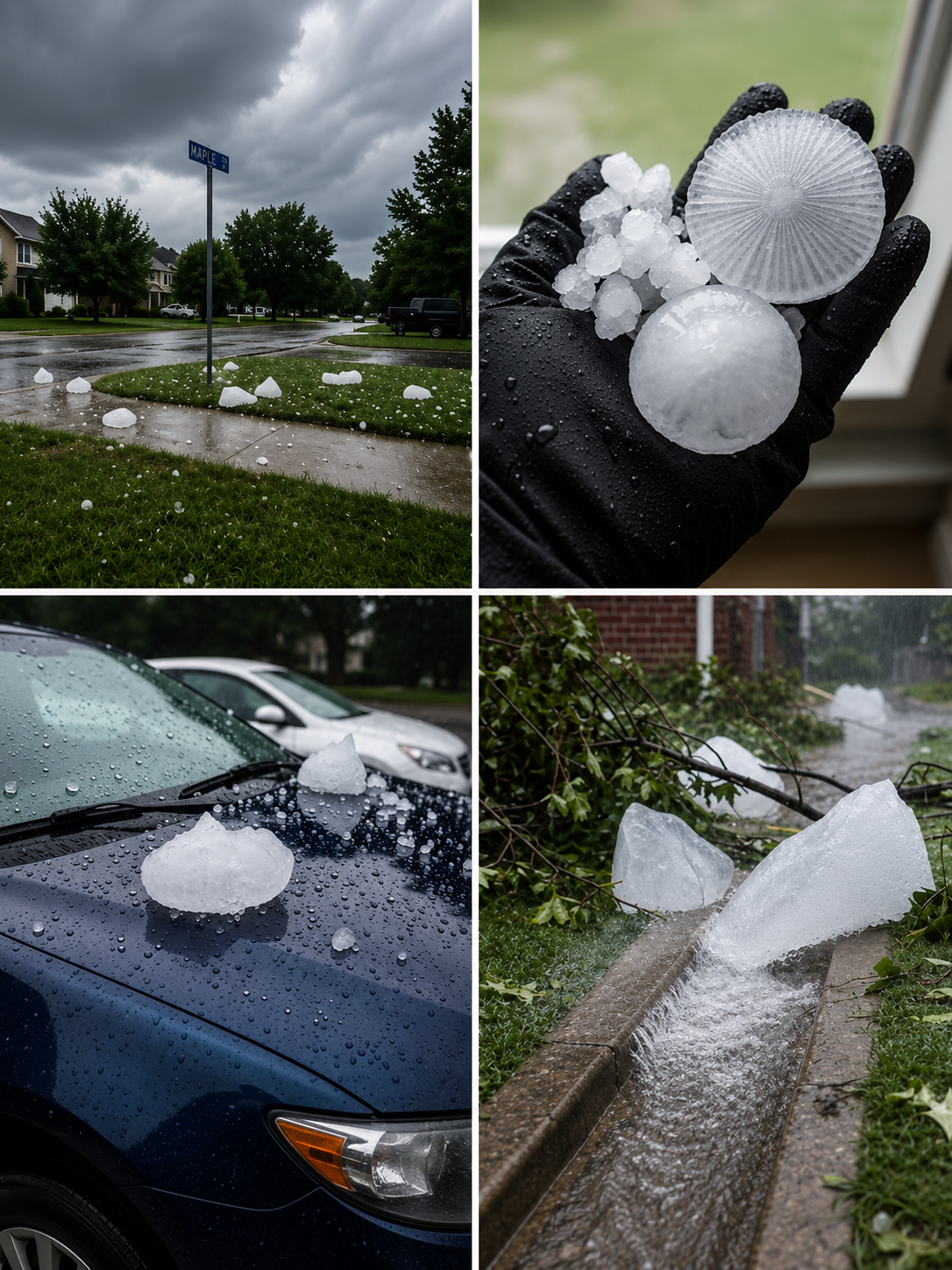
Photos circulating online show giant hailstones scattered across residential neighborhoods, resting on parked vehicles, and collected by residents after storms swept through affected communities. Some of the hailstones appeared comparable in size to baseballs or even softballs, highlighting the intensity of the storms.
While the exact origin of the viral image collage remains unconfirmed, multiple recent hail events documented by credible weather agencies and news organizations show similarly destructive conditions occurring across parts of the United States and Canada.
According to reports from regional meteorologists and local authorities, powerful supercell thunderstorms have generated severe hail in states including Missouri, Kansas, Ohio, and areas of the Midwest. Recent reports also documented major hailstorms in southern Alberta, Canada, where storms damaged homes, vehicles, and agricultural property.
Weather experts explain that hail forms when strong thunderstorm updrafts repeatedly carry ice particles high into freezing sections of storm clouds. As the ice circulates inside the storm, additional layers accumulate until the stones become too heavy to remain suspended, eventually crashing to the ground.
The National Weather Service classifies hail over one inch in diameter as “severe,” but several recent storms have reportedly produced hailstones exceeding three to five inches in diameter.
In Kansas City earlier this year, meteorologists documented hailstones reaching approximately four inches in diameter during severe thunderstorms that moved across the metropolitan area. Residents shared images of smashed windshields, heavily dented vehicles, and broken property after the storms passed.
Similar conditions were observed in parts of Canada, where satellite imagery captured the aftermath of a major hailstorm that carved visible damage patterns across large sections of southern Alberta. Scientists and meteorologists later described the storm as one of the region’s more destructive recent hail events.
Experts say hailstorms remain among the costliest severe weather hazards in North America. Unlike tornadoes, which usually affect narrower areas, hailstorms can impact large urban regions simultaneously, causing widespread insurance losses and extensive damage to vehicles, rooftops, crops, and infrastructure.
According to scientific and meteorological studies, hail causes billions of dollars in damage annually across the United States and Canada. Large hail can also create life-threatening conditions for anyone caught outdoors during severe weather outbreaks.
Videos posted online from recent storms show roads covered with ice, tree branches snapped by heavy hail impact, and floodwaters rushing through residential streets during intense rainfall. In several cases, residents rushed to move vehicles into garages or under shelter as storms rapidly intensified.
Meteorologists warn that warmer atmospheric conditions combined with unstable storm environments may contribute to stronger severe thunderstorm outbreaks capable of producing larger hail. Researchers continue studying hailstorm behavior to improve forecasting accuracy and reduce damage risks.
Scientists involved in large-scale hail research programs across the United States are currently examining how storm structure, atmospheric instability, and climate patterns influence hail formation and storm severity.
Emergency officials continue advising residents in storm-prone regions to monitor severe weather alerts closely, seek indoor shelter immediately during hail warnings, and avoid driving through active storm zones whenever possible.
Weather authorities also remind the public that even small hailstones traveling at high speeds can cause injuries, while larger hail can become extremely dangerous within seconds.
As severe weather season continues across parts of North America, forecasters expect additional thunderstorm outbreaks capable of producing damaging hail, strong winds, and flash flooding conditions in the coming weeks.