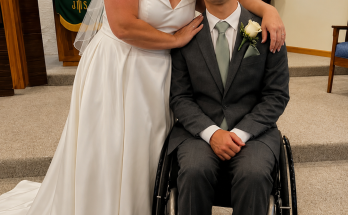
When an Image Tells a Story That Isn’t Really There

Some images instantly pull attention, not because of what’s happening, but because of how they’re framed. A single angle, a paused expression, or a cropped moment can suggest a narrative that may not exist at all. The brain fills in the blanks before logic has time to catch up.
This kind of image works because it captures a moment mid-action. Without context, viewers project meaning onto posture and expression, assuming intensity, surprise, or emotion that could be completely unrelated to reality. What might be an ordinary movement becomes something else entirely once frozen in time.
That’s why images like this travel so fast online. They don’t explain themselves — they invite interpretation. The real power isn’t in the photo itself, but in how easily perception turns ambiguity into a story.
Sometimes, the most misleading images aren’t edited or staged. They’re just paused at the perfect moment to let imagination take over.
These moments exploit a quiet vulnerability in human perception. Our minds are wired to seek patterns and intent, even when none are clearly present. When an image withholds context, the brain doesn’t wait for clarification—it invents it. A tilt of the head becomes confidence or defiance. A raised hand suggests urgency or drama. Meaning is assigned instantly, often unconsciously.
Framing plays a subtle but powerful role here. What’s excluded from the frame can be just as influential as what’s included. By isolating a subject from their surroundings, the image strips away clues that might otherwise ground interpretation in reality. The absence of context creates a vacuum, and perception rushes in to fill it.
Still images are especially deceptive because they interrupt time. Motion usually carries explanation—before and after give actions their purpose. When a single frame removes that flow, it transforms a fragment into a conclusion. The viewer assumes that the captured instant represents the whole truth, even though it may be the least accurate part of the sequence.
Social media accelerates this effect. Platforms reward images that spark immediate emotional reactions, not careful analysis. The faster an image is understood—or misunderstood—the more likely it is to be shared. Ambiguity becomes a feature, not a flaw. The less certain the meaning, the more people feel compelled to discuss, react, and project their own narratives onto it.
In the end, these images reveal more about the viewer than the subject. They act like mirrors, reflecting personal assumptions, biases, and emotional states. What one person reads as confidence, another sees as arrogance. What looks dramatic to one appears accidental to someone else.
That’s the quiet power of a paused moment. It doesn’t lie outright—it simply lets the imagination do the work. And once a story forms in the mind, it often feels more real than the truth that came before or after the frame.